Back to Blog
How Vibe Coding Changed the Way I Work
From skeptical to believer—how AI-assisted coding transformed my workflow from being a "typist" to becoming an "architect" of software solutions.
Back
Engineering
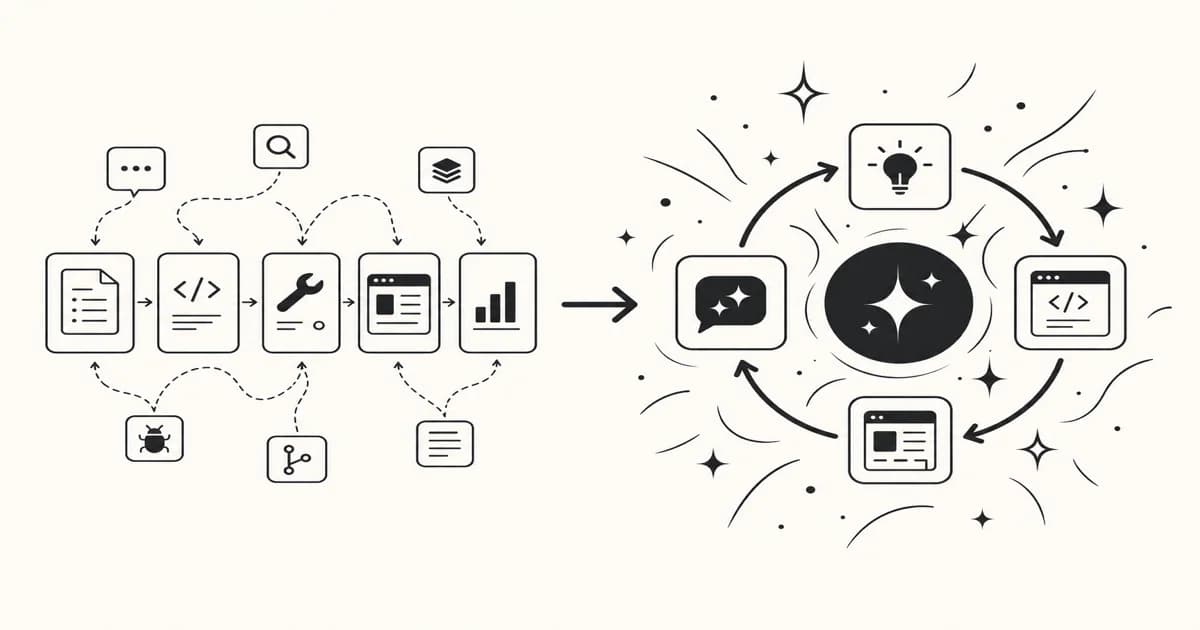
Table of contents
There was a moment that made me realize the way we code has totally changed. It's not about memorizing syntax or stressing over a missing bracket anymore. It's more about how we "connect" with AI to build things. Nowadays, people call this: Vibe Coding.
Honestly, I was skeptical at first. As someone used to dealing with Laravel or complicated logistics systems, the idea of "coding with a vibe" sounded a bit too abstract. But after trying it myself, it turns out this isn't about being lazy—it's about a whole new level of efficiency.
What Is Vibe Coding, Actually?
To me, vibe coding is simply when we stop being "typists" and start being "architects." You aren't thinking about how to write the correct loop in JavaScript anymore. Instead, you focus on the intent: "Hey, I want this tracking feature to auto-translate its status using the Gemini API if the destination is overseas."
You give the "vibe," you give the context, and let AI handle the small technical details.
Reality Check: Fundamentals Are Still Crucial
But look, there's one thing that is often misunderstood. Don't let the fun of "vibing" make you forget the basics. I often tell my colleagues: Vibe coding without fundamentals is a recipe for disaster.
Why? Because AI is a hallucinator that is very confident in itself. If you don't understand the fundamentals—like how database indexing works, asynchronous processes, or data structures—you won't know that the code AI gave you is actually trash that will crash your server when traffic spikes.
AI can help us run faster, but we still need to know the path. You must be able to read code, know why a query is slow, and understand basic security. Without that, you aren't a vibe coder; you're just a copy-paster waiting for trouble to happen.
We Still Need "Engineer Instinct"
This is where our role as engineers becomes even more important. AI can provide the code, but we hold the control over quality. In my projects, like when optimizing international tracking, AI is super helpful for quickly creating the boilerplate, but the core logic still has to go through my brain's filter.
We aren't exhausting our fingers anymore, but we are playing more in strategy. We don't need to hate the coding process just because of silly mistakes like typos or missing semicolons.
Closing Thoughts
Vibe coding is about comfort and speed. But remember, don't just blindly swallow everything that comes out of the chatbox. Keep your fundamentals sharp, because that's the only validation tool you have when AI starts "hallucinating."
If you want to see vibe coding in action with a real example, check out my hands-on experiment building a coffee shop landing page with Antigravity—from idea to working HTML in under a minute.
Comments
No comments yet
Loading comments...